

Car detailing is having a real moment in India. More car owners are willing to pay for ceramic coatings, paint correction, and PPF than ever before, and that demand has pulled in a wave of people who want to turn detailing into a career — or their own studio.
But here’s the catch: not every “detailing course” you find on Instagram or Google is actually worth your money. Some are a weekend of watching someone else buff a bonnet. Others are full training programs that genuinely prepare you to run a business.
If you’re about to enroll in a car detailing training institute in India, here’s what actually matters before you hand over your fees.
Why the Right Training Institute Matters So Much
Detailing looks simple from the outside — spray, buff, shine. In reality, a huge amount of the industry’s problems come from undertrained detailers who don’t understand product chemistry, machine handling, or paint thickness. Wrong pad, wrong compound, wrong pressure, and you can burn through clear coat that took a factory hours to apply.
A serious training institute doesn’t just teach you how to detail a car. It teaches you why certain techniques work, how to avoid damaging a customer’s vehicle, and how to actually run a profitable studio afterward. That last part — the business side — is where a lot of course providers fall short.
1. Check Who’s Actually Teaching You
Before enrolling anywhere, find out who the lead trainer is and what their real, verifiable experience looks like. A good indicator is whether the trainer has:
- Hands-on experience running their own detailing studios, not just teaching theory
- A track record of mentoring other studio owners or franchisees
- Recognition or accreditation from established detailing or coating brands
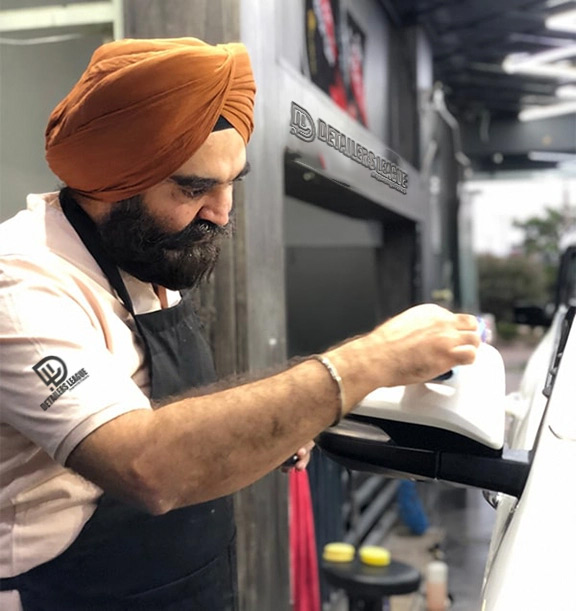
For instance, Detailers League is led by Jasmeet Singh Gulati, who brings well over a decade and a half of industry experience and has been closely involved in setting up several hundred car detailing studios across India and neighboring countries. That kind of practical, on-ground experience is very different from a trainer who’s only worked behind a classroom desk.
2. Look for a Curriculum That Covers the Full Business, Not Just the Buffer
A lot of short courses only cover exterior polishing and maybe a coating application. That’s a small slice of what you actually need if your goal is to start or scale a detailing business.
A well-structured program should walk you through:
- Exterior detailing — washing, decontamination, paint correction, polishing
- Interior detailing — deep cleaning, upholstery care, restoration
- Coating application — ceramic and graphene coatings, done correctly and safely
- PPF and vinyl wrap installation — a growing, high-margin service
- Entrepreneurship and business setup — pricing, marketing, studio layout, and client management
If a course skips the entrepreneurship piece entirely, ask yourself whether it’s really preparing you to run a business — or just teaching you a trade you’ll struggle to monetize.
3. Hands-On Training Beats Video Tutorials Every Time
You cannot learn machine polishing, pad selection, or coating application purely by watching videos. Detailing is a tactile skill — how the machine feels in your hand, how the paint reacts under different pressure, how a coating levels out as it cures. None of that transfers well through a screen.
Before enrolling, ask:
- Is this an in-person, hands-on program, or mostly recorded video content?
- How many real vehicles will you actually work on during the course?
- What’s the trainer-to-student ratio? (Smaller batches mean more individual correction and feedback.)
Institutes that cap their batch sizes — rather than cramming in as many enrollments as possible — tend to produce detailers who are genuinely job-ready, not just certificate-ready.
4. Certification Should Actually Mean Something
A certificate is only as valuable as the reputation behind it. Before you enroll, check:
- Is the institute an authorized training partner for any recognized detailing or coating brand?
- Does the certificate carry weight with employers, franchise networks, or customers?
- Will it help you get hired at an established studio, or apply to become an authorized service partner for a product brand?
Certification matters most when it opens doors — franchise opportunities, dealer partnerships, or simply customer trust when you tell them you’re a certified car detailing professional.
5. Post-Course Support Is a Big, Often-Overlooked Factor
Finishing a course and then being left to figure out the rest on your own is one of the most common complaints from new detailers. The real value of a good institute often shows up after you graduate:
- Do they offer ongoing support via phone, email, or WhatsApp once you’re back home?
- Do they help with studio setup, layout planning, or pricing strategy?
- Do they offer discounts or easier access to detailing products and equipment for graduates?
- Is there a platform or network where you can showcase your work and get discovered by potential clients?
Programs that include personalized consultation on studio layout, service pricing, and marketing strategy tend to produce far more successful entrepreneurs than ones that stop at “here’s your certificate, good luck.”
6. Location, Duration, and Facilities Still Matter
Practical details matter more than people expect:
- Duration — A single-day workshop won’t cover exterior detailing, interior work, coatings, PPF, and business setup properly. Look for multi-day, structured programs (around five days is a common standard for comprehensive training).
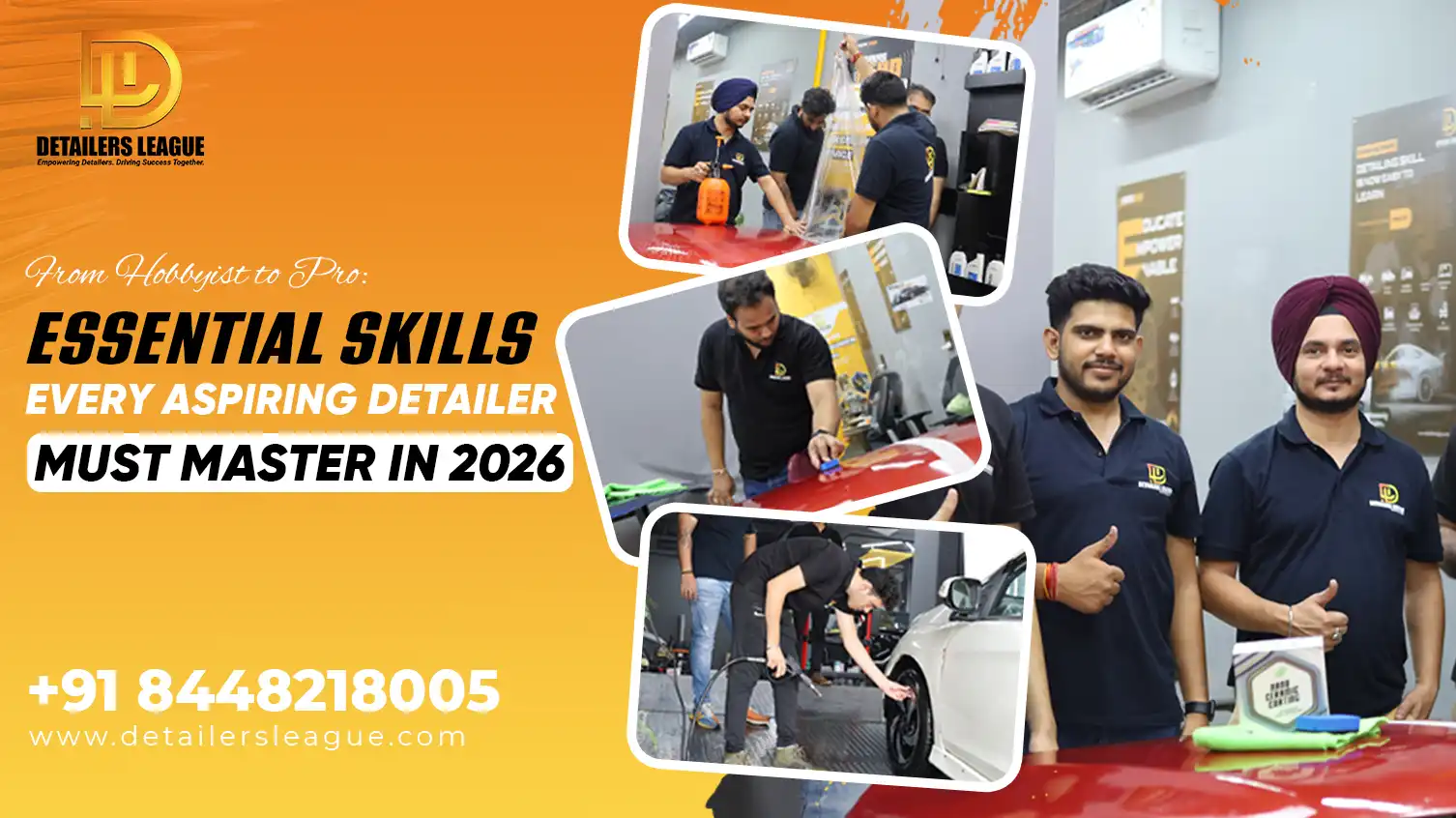
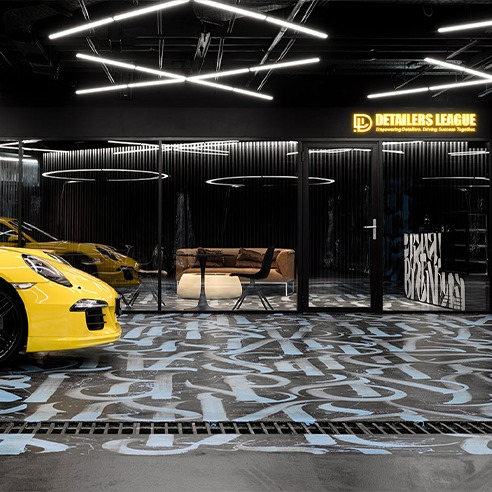
- Facilities — Is training conducted in a proper, well-equipped studio with real tools and machines, or a makeshift setup?
- Batch size — Smaller batches (single digits) usually mean better hands-on attention.
- Extras — Included meals, dedicated practice days, and a reserve/practical assessment day are signs of a well thought-out program.
7. Read Between the Lines of Testimonials
Almost every institute will show you glowing reviews. Instead of just reading them, look for specifics:
- Do students mention actually starting their own studios afterward?
- Do they talk about the business side (pricing, marketing) as well as the technical training?
- Are there recent, verifiable testimonials — not just a handful from years ago?
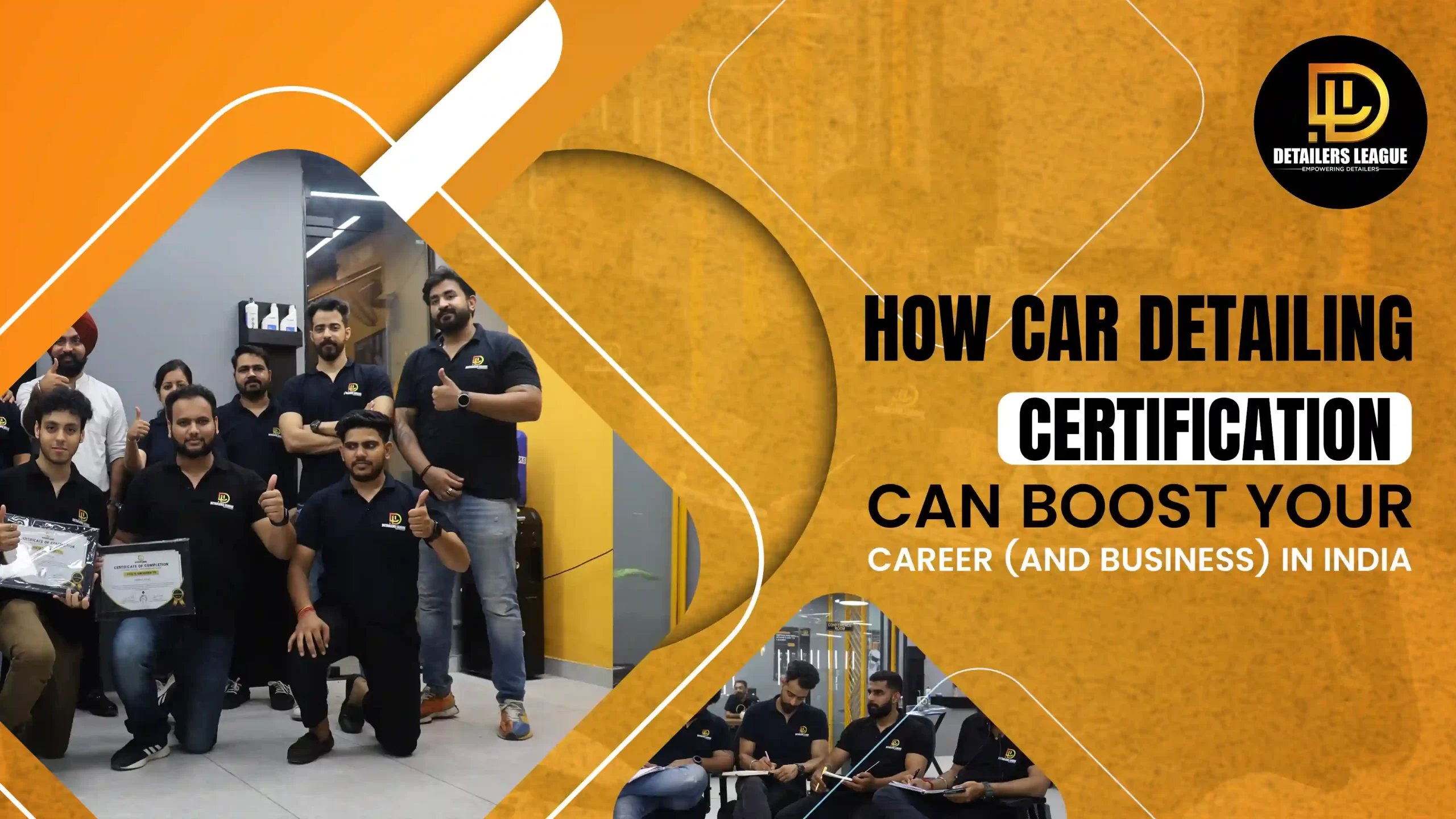
Institutes like Detailers League feature alumni who’ve gone on to open their own detailing studios, citing the combination of hands-on learning, personalized mentoring, and a proper master certification as the reason it actually worked for them.
Final Checklist Before You Enroll
- Verified, experienced lead trainer with real industry credibility
- Curriculum covers exterior, interior, coatings, PPF, and business/entrepreneurship
- Hands-on, in-person training with small batch sizes
- Recognized certification with real industry value
- Post-course support — mentoring, product access, or a platform to showcase your work
- Proper facilities and a realistic course duration (multi-day, not a single afternoon)
Final Thoughts
Choosing a car detailing training institute isn’t just about learning to make a car shine — it’s about picking the foundation for a potential career or business. The right program combines genuine hands-on technical training with real business mentorship, backed by trainers who’ve actually built and run studios themselves.
Take your time, ask the questions above, and don’t be shy about asking an institute directly how they support students after the course ends. That one question alone tends to separate the training providers who are serious about your success from the ones who are just selling a certificate.
Detailers League, founded and led by Jasmeet Singh Gulati, offers hands-on, multi-day training programs in car detailing, ceramic and graphene coating, PPF installation, and entrepreneurship — combining technical mastery with real business mentoring for students across India.