
Have you noticed how often people talk about Paint Protection Film (PPF) these days?
Open Instagram, and you’ll probably come across a video of someone applying a transparent film to a beautiful car.
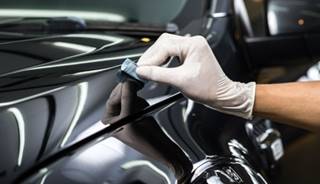
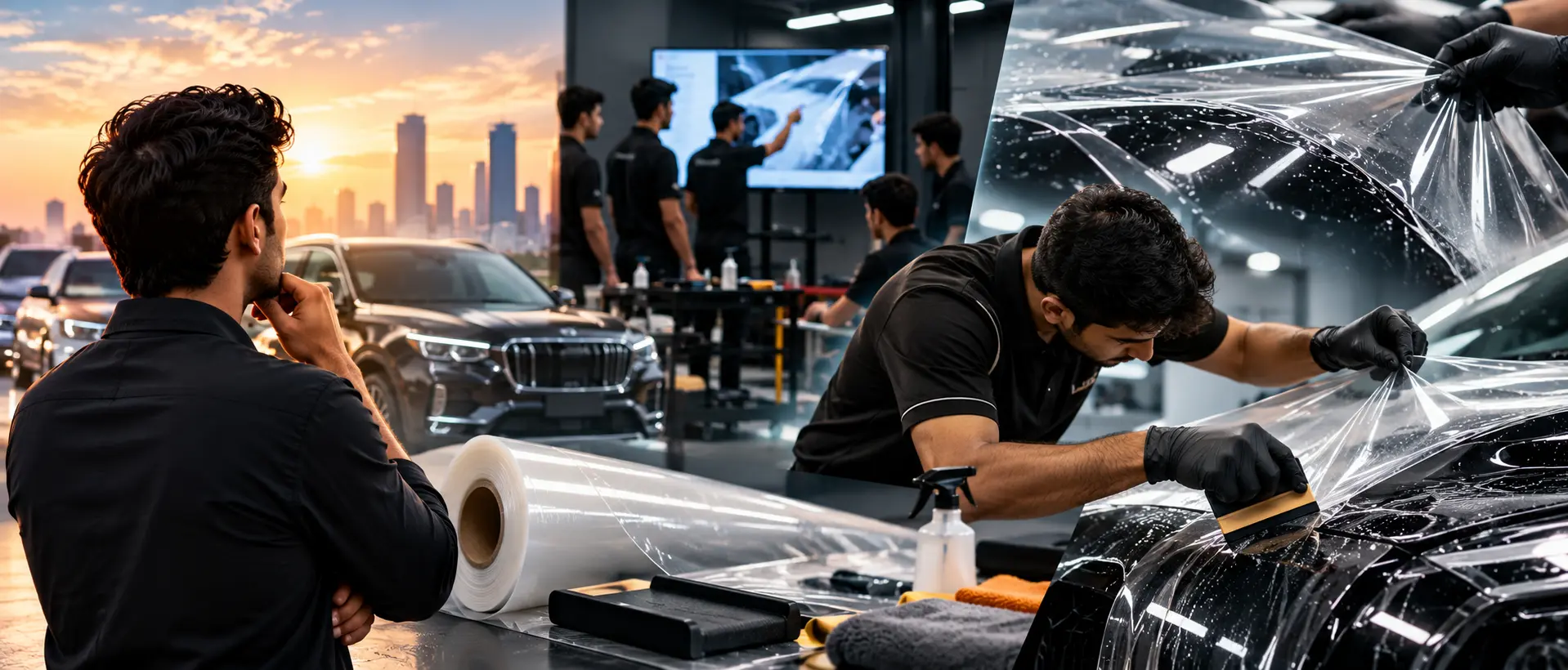
The technician carefully stretches the film, removes water from underneath, and makes the edges look almost invisible.
The final result looks amazing.
And you might think, “That doesn’t look too difficult.”
But here’s the interesting part.
Watching someone install PPF and actually installing it yourself are two completely different things.
Behind that smooth finish are hours of practice, patience, and technical knowledge.
And for someone who loves cars, learning these skills could be the beginning of a new career.
1. Why Is Everyone Suddenly Interested in PPF?
Let’s imagine something.
You’ve just purchased your dream car.
You’ve spent months saving money, comparing models, and choosing the perfect colour.
Naturally, you want it to look new for as long as possible.
But everyday driving comes with challenges.
Small stones hit the bumper. Dust collects on the paint. Minor scratches appear around door handles.
That’s why some car owners consider Paint Protection Film.
PPF is a transparent protective film applied to painted vehicle surfaces. It helps protect against minor scratches, stone chips, and everyday road damage.
As more people learn about car paint protection, professional PPF installation is becoming a service worth paying attention to.
And every professional installation needs someone who knows how to do the job properly.
2. A Beautiful PPF Installation Starts With Skilled Hands
Here’s something people don’t always see in those satisfying detailing videos.
Before the film goes onto the car, the technician needs to prepare the surface.
The car must be cleaned properly.
The film must be positioned carefully.
Application solutions need to be used correctly.
And the technician needs to handle curves, corners, and edges without damaging the film or vehicle.
One small mistake can create bubbles, wrinkles, lifting edges, or wasted material.
That’s why professional PPF installation is not simply about sticking a film onto a car.
It’s a skill.
And like most practical skills, it improves with proper guidance and repeated practice.
3. Can a Beginner Really Learn Car Detailing?
Let’s say you’re 21 years old.
You love cars, enjoy watching automotive videos, and want to learn something practical.
But you’ve never used a polishing machine.
You’ve never applied ceramic coating.
And you don’t know the first thing about installing PPF.
Does that mean you can’t enter this industry?
Not at all.
Everyone starts somewhere.
A professional car detailing course can help beginners understand the basics before moving towards advanced techniques.
You can learn about different car surfaces, cleaning products, polishing equipment, paint protection, and safe working methods.
The important thing is to start with the fundamentals.
You don’t need to know everything on your first day.
You need curiosity, patience, and a willingness to practise.
4. Why Watching YouTube Videos Isn’t Always Enough
Let’s be clear.
YouTube is a wonderful place to learn new things.
You can watch experienced detailers explain polishing methods, coating applications, and PPF installation.
But there’s one thing a video cannot do.
It cannot stand beside you and correct your technique.
Imagine holding a polishing machine for the first time.
How much pressure should you apply?
How fast should you move it?
What happens if you work on the same area for too long?
These questions become much easier to understand when an experienced trainer demonstrates the technique and supervises your practice.
That’s the advantage of hands-on car detailing training.
You get to use professional equipment, understand your mistakes, and gradually build confidence.
And when you’re working on someone else’s expensive car, that confidence needs to come from real ability.
5. What Should You Learn in a Professional Car Detailing Course?
A good car detailing course should teach you more than how to make a car shine.
It should help you understand the process behind professional detailing.
Some important skills include:
Exterior and Interior Detailing
Learn how to clean different vehicle surfaces safely, remove dirt, and maintain interior materials without causing unnecessary damage.
Paint Correction and Polishing
Understand how polishing machines, pads, and compounds work together to improve paint appearance.
Ceramic and Graphene Coating
Learn about surface preparation, coating application, curing requirements, and proper maintenance.
Paint Protection Film Installation
Understand film handling, surface preparation, positioning, application solutions, and finishing techniques.
Customer Handling and Business Basics
Learn how to explain services, estimate costs, understand customer expectations, and manage a detailing business.
These skills can help you explore different roles in the professional automotive care industry.
6. What Makes Hands-On Training So Important?
Imagine two students learning PPF installation.
The first student watches ten videos and remembers every step.
The second student watches demonstrations and then spends time practising under a trainer’s supervision.
Who is more likely to understand the difficulties of working with real film on a curved vehicle panel?
The second student has experienced the process firsthand.
They have felt how the material behaves.
They have seen what happens when positioning goes wrong.
And they’ve learned how to correct mistakes.
That’s why practical learning matters.
Car detailing involves working with expensive vehicles, specialized chemicals, and professional equipment.
A mistake can cost money or damage a customer’s vehicle.
Good training helps you understand not only what to do, but also what to avoid.
7. How Detailers League Helps Beginners Learn Professional Skills
If you’re looking for a structured car detailing course in India, Detailers League offers professional training programs.
Its five-day Advanced Course in Detailing, Coating, PPF, and Entrepreneurship combines technical learning with practical workshops.
The course covers areas such as exterior detailing, polishing, ceramic and graphene coatings, PPF installation, and business fundamentals.
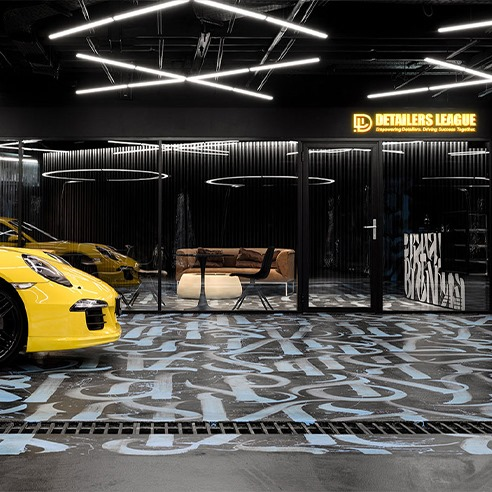
Training is conducted at the Detailers League facility in Noida, Uttar Pradesh.
Students have the opportunity to learn with professional tools and equipment in a dedicated training environment.
The program also includes entrepreneurship-related learning for people who may want to open their own detailing studio in the future.
For beginners, this structured approach can provide a foundation for further practice and skill development.
However, completing a short course doesn’t make someone an expert overnight.
Professional ability develops through continued practice, feedback, and real-world experience.
8. What Can You Do After Completing a Car Detailing Course?
This is probably the question that matters most.
“What happens after I finish the training?”
The answer depends on your interests and the skills you’ve developed.
Some people may want to work as junior detailers at professional studios.
Others may be interested in specializing in PPF installation or paint correction.
People with business experience may eventually explore opening a car detailing studio.
You could also continue learning more advanced techniques as you gain experience.
But remember something important.
A certificate is not a guaranteed job.
Employers and customers will also care about your practical ability, reliability, and quality of work.
The goal of training should be to build useful skills that you can continue improving.
9. Is Car Detailing Only for People Who Love Luxury Cars?
Not at all.
You don’t need to own a luxury car or come from an automobile background to learn detailing.
What matters more is your interest in the work.
Do you enjoy working with your hands?
Can you pay attention to small details?
Are you patient enough to repeat a task until you improve?
Are you willing to learn how different products and tools work?
If your answer is yes, car detailing may be worth exploring.
And the work isn’t limited to expensive cars.
Everyday vehicles also need proper cleaning, maintenance, and paint care.
A good detailer understands how to work carefully on different types of vehicles.
10. Is 2026 a Good Time to Learn PPF and Car Detailing?
There is growing interest in professional car protection services in India.
In March 2026, Autocar Professional reported that PPF adoption in India remained relatively low compared with some international markets, suggesting room for further awareness and market development.
That doesn’t mean every trained detailer will immediately find a high-paying job.
But it does mean that learning professional car care skills is an option worth researching.
Before enrolling, compare courses, ask about practical training hours, understand the fees, and find out what equipment and materials are included.
Choose a program that helps you build genuine ability rather than simply promising a certificate.
Final Thoughts: Every Expert Was Once a Beginner
The first time you hold a polishing machine, you might feel nervous.
The first time you try installing PPF, you might make mistakes.
And the first time you work on a real car, you may need someone to guide you.
That’s completely normal.
Nobody becomes a professional by watching a few videos.
Skills develop when you learn, practise, make corrections, and keep improving.
If you enjoy cars and want to explore a practical career, professional car detailing training could be a meaningful first step.
You don’t need to know everything today.
You just need to be willing to learn.
Start Learning With Detailers League
Interested in learning car detailing, ceramic coating, or professional PPF installation?
Explore the practical training programs offered by Detailers League and find a course that matches your goals.
Website: https://detailersleague.com/
Explore the Course: https://detailersleague.com/program/advance-course-in-detailing-coating
Contact: +91 8448218005
Frequently Asked Questions
Q1. Can beginners join a car detailing course?
Yes. Beginners can join introductory or structured professional training programs to learn the fundamentals of car detailing.
Q2. How long is the Detailers League car detailing course?
Detailers League offers a five-day Advanced Course in Detailing, Coating, PPF, and Entrepreneurship. Other specialized programs are also available.
Q3. Can I learn PPF installation without previous experience?
Yes. You can begin learning PPF installation through supervised practical training. Becoming proficient requires continued practice.
Q4. Is a car detailing certificate enough to get a job?
A certificate can demonstrate training completion, but employment depends on your practical skills, experience, and the employer’s requirements.
Q5. Does Detailers League teach ceramic coating and PPF?
Yes. Its advanced program covers ceramic and graphene coating techniques as well as PPF installation.
Q6. Where is Detailers League training conducted?
Its official website lists a dedicated training facility in Noida, Uttar Pradesh.